Fire Emblem Heroes
- 4.5
- Rating
- 10.00M
- Installs
- Free
- Price

 Analysis by App-foxy
Fire Emblem Heroes is the kind of mobile game that can feel immediately comfortable if you already enjoy tactical battles, collectible characters, and short sessions. I spent time with it as a strategy RPG rather than treating it like a quick distraction, and its strongest quality became clear early: it turns the familiar Fire Emblem formula into compact battles that fit neatly into a phone screen. That makes it easy to start, but the more important question is whether it remains worth opening once the first wave of curiosity has passed.
My answer is mostly yes, although the reason depends heavily on what you want from a mobile game. If you want a deep, traditional console-style campaign with long maps and a large amount of uninterrupted story, this is not a direct replacement. If you want a flexible tactical game that rewards planning in small bursts, it has considerably more staying power. The free entry point helps, but the presence of optional purchases means you need to decide early how seriously you want to chase every character and upgrade.
Why the first week feels so inviting
The opening experience is built around quick feedback. Battles are divided into manageable encounters, and the small maps make the basic tactical question easy to understand: where should each unit stand, which enemy should be attacked first, and how can I finish the turn without leaving someone exposed? I liked that the game does not require a long uninterrupted block of time before giving me a meaningful decision. A short session can still contain a complete battle and a clear reward.
You May Also Like

 Blood Strike: 2.5 Anniversary
Blood Strike’s Loadouts Turn Every Drop Into a Tactical Gamble
A close look at Blood Strike’s custom loadouts: how fast access to signature weapons reshapes its battle royale rhythm, rewards preparation, and narrows the gap between fights.

 Pandora - Music & Podcasts
Pandora’s Music Is Easy to Start, but Harder to Recover
Pandora’s strength is its low-effort path from a seed to a station. Its weak spot is how much confidence it asks you to place in connection, setup, and quiet recovery.

 8 Ball Pool
 Is Built on Rivalries, Rematches, and Routine
A close look at the rivalries, rematches, shared routines, and unanswered safety questions that turn a quick pool match into a persistent mobile community.

 Samsung Music
’s Quiet Strength Is Playing What You Already Own
Its reach comes less from spectacle than from dependable access to a personal library. That simplicity is both the app’s strongest retention engine and its ceiling.

 AccuWeather: Weather Radar
AccuWeather Review: A Quick, Clear Forecast for Everyday Decisions
For everyday plans, the best forecast is the one you can understand quickly. AccuWeather makes rain timing, radar, and local conditions easy to act on, with a few trade-offs.

 Hill Climb Racing
Why Hill Climb Racing Still Turns Crashes Into One More Run
A tiny car, a bumpy hill and one more upgrade: Hill Climb Racing keeps resurfacing because its simple chaos makes every near-miss feel personal.
More From Our News Desk



The Fire Emblem identity also gives the game an advantage over many anonymous mobile strategy titles. Recognizable heroes and villains create an immediate reason to experiment with the roster, especially when a favorite character appears in a different role or arrives with a different set of abilities. That collection element is not merely decorative. It encourages me to compare units, consider team balance, and think about how a character changes the way I approach a map.
During the first few days, the most useful habit is resisting the urge to build a single team and use it everywhere. Different maps put pressure on different strengths, so I found it more rewarding to test combinations instead of automatically choosing the characters with the highest apparent power. A unit that looks less impressive in isolation can become valuable when its movement, weapon type, or support effect solves a particular problem. The best early progress comes from learning what each unit enables, not from simply collecting more units.
The controls are approachable for a touch screen. I can move a character by dragging, inspect the likely outcome of an attack, and adjust my plan before committing. That clarity matters because tactical games become frustrating when the interface hides important consequences. Here, the compact format makes experimentation less intimidating than in a larger strategy game, while still leaving room for mistakes caused by careless positioning.
New players should pay attention to the difference between winning a battle and understanding why it was won. Early victories can make an improvised team look stronger than it really is. I recommend replaying a few easier encounters with a different formation and watching how the result changes. That simple exercise teaches the value of range, turn order, and defensive positioning before later content begins demanding more deliberate planning.
The game is free to start, which makes the first week easy to recommend as a trial. It runs on Android devices using at least OS 9, and the current version is 10.2.1. Those details matter less than the practical question of whether your phone handles the game comfortably, but the relatively accessible system requirement means more players can test the experience without upgrading hardware first.
What makes the early collection loop work
Collecting heroes gives the first week a strong sense of discovery, but I think the real appeal is the decision that follows each acquisition. A new character is not automatically useful simply because the character is new. I have to decide whether this unit fills a missing role, deserves resources, or is better kept as an option for a particular type of map. That small act of evaluation gives the roster more meaning than a simple list of unlocked names.
One practical approach is to keep a modest core team while reserving resources for flexible additions. Constantly rebuilding every time a new hero appears can leave a player with many half-developed units and no dependable group for difficult stages. I prefer maintaining a few reliable options and then developing specialists when a clear tactical need appears. This approach reduces waste and makes the collection feel like a toolbox rather than a pile of prizes.
The first-week experience is also a good test of patience. The game repeatedly invites attention through rewards, new objectives, and the possibility of improving a favorite character. If you enjoy checking progress several times a day, that rhythm may feel satisfying. If you prefer a game that gives you a complete experience in one sitting and then lets you leave it alone, the recurring structure may already feel slightly demanding.
What remains valuable from month to month
After the novelty fades, Fire Emblem Heroes depends on whether its tactical decisions remain interesting when the roster is more familiar. In my experience, they do, but not equally for everyone. The compact maps are excellent for regular practice and short challenges, yet players looking for a single, steadily unfolding adventure may eventually feel that the experience is fragmented. Its long-term value comes from repeated problem-solving, not from a traditional campaign that carries you forward in one uninterrupted line.
The game works especially well as a daily or near-daily habit for someone who enjoys gradual improvement. I can return, refine a team, try a stage again, and notice that a small change in positioning makes a previously awkward encounter manageable. That loop is more satisfying than simply watching numbers rise because the player’s understanding matters. Better decisions can compensate for a less glamorous roster, at least in many ordinary situations.
For a realistic everyday use case, imagine having ten minutes before a commute or while waiting for an appointment. Fire Emblem Heroes is well suited to that window because a focused battle can provide a clear beginning and end. I would not choose it when I need to concentrate on a long narrative sequence or when I expect to play offline without interruption. I would choose it when I want a tactical puzzle that can be paused mentally between small sessions.
The month-to-month experience also benefits from rotating goals and the desire to revisit units. A character that seemed unnecessary at the beginning may become useful after the rest of the team changes. That creates a reason to look back at older options rather than treating the roster as disposable. Still, this value depends on enjoying experimentation. Players who want one permanently optimal team may find the constant comparison tiring instead of engaging.
Its average rating is 4.5 from around 636 thousand ratings, and the game has passed 10 million installs. Those figures do not prove that every player will enjoy the long-term loop, but they do reflect a substantial audience that has found the basic combination of strategy and collection appealing. I think the larger lesson is that the game has enough depth to support continued interest, provided the player accepts its mobile structure rather than expecting a full console campaign.
How it compares with more traditional strategy games
Compared with a conventional Fire Emblem release on a dedicated console, this mobile version is more convenient and more fragmented. Its battles are easier to fit into a busy day, and the roster provides immediate variety. The trade-off is that the experience does not deliver the same sense of one large journey with a fixed cast, extended maps, and a campaign built around long-term narrative momentum. I would choose the console format for immersion and the mobile format for repeatable tactical sessions.
Compared with casual puzzle games, Fire Emblem Heroes asks more of me. I cannot always rely on reflexes or a single obvious move; I need to understand unit roles and anticipate an enemy response. That makes it more rewarding for strategy fans, but less suitable when I want something completely mindless. Compared with other character-collection games, its distinctive strength is that the battles give the collection a practical purpose. The roster is tied to positioning and matchups rather than existing only as a visual catalogue.
There is also a difference in how failure feels. In a pure puzzle game, losing usually points to one incorrect solution. Here, failure can come from a weak team, a poor formation, a mistimed attack, or an assumption about what an enemy will do. That ambiguity is part of the appeal for experienced players, but beginners may need to slow down and inspect their decisions instead of blaming the game immediately.
The maintenance burden behind the friendly interface
The main maintenance burden is not learning the controls; it is managing the roster and the stream of decisions around it. A player who wants to stay organized has to think about which heroes deserve attention, which upgrades support a particular role, and which rewards should be saved rather than spent immediately. I found that the game becomes more comfortable when I treat resources as a long-term budget instead of reacting to every new opportunity.
This is also where the free-to-play structure deserves honest attention. The game costs nothing to download, but optional in-app purchases range from $1.99 to $74.99 per item. A casual player can approach it without spending, yet the temptation to accelerate collection or development is part of the design. I would set a personal limit before becoming invested in a favorite character or a particular goal. Making that decision early is easier than trying to control spending after frustration appears.
Another useful habit is to avoid treating every limited opportunity as mandatory. Mobile games can create pressure by making an event or reward feel urgent, but not every reward deserves a change to your entire routine. I get more enjoyment when I choose a small number of goals and let the rest pass. This protects the game from becoming a second job and keeps my attention on battles rather than on constant account management.
The Teen content rating is worth considering for families and younger players. Even when the tactical action itself feels approachable, the collection and purchase systems make this less suitable as an unsupervised first mobile game. I would be comfortable recommending it to a teenager who understands spending boundaries and enjoys strategy, but I would explain the purchase model before handing over unrestricted access.
Maintenance also includes accepting that progress can feel uneven. Some sessions are about solving a difficult map; others are mainly about sorting, upgrading, or deciding what to do next. That variety can be useful when I have limited time, but it can also make the game feel administrative. If you want every minute to contain a dramatic tactical decision, the management layer may seem like friction rather than preparation.
Where fatigue starts to appear
The largest source of fatigue is repetition without a personal objective. Battles may remain mechanically sound, but repeating similar tasks just to keep momentum can make the routine feel automatic. I avoid that feeling by giving each session a question to answer: can this unit replace another, can I clear the map with a different formation, or can I finish without relying on my usual solution? Without a goal like that, the collection loop loses some of its purpose.
Roster comparison can create another kind of tiredness. The more characters I consider, the more time I spend deciding who to develop. That is enjoyable when I am in an experimental mood, but exhausting when I only want to play. A smaller personal shortlist helps. I would rather know the strengths and weaknesses of a manageable group than constantly chase an ideal lineup that keeps changing.
The pressure to keep up can also weaken the relaxed quality that initially makes the game attractive. A player who treats every reward, banner, or challenge as essential may end up checking the game out of obligation. I think the healthier approach is to regard the game as a library of tactical activities, not a schedule that must be completed. Missing a goal should not erase the value of the battles already enjoyed.
There is a further limitation for people who primarily want narrative. The Fire Emblem name may suggest a story-first adventure, but this mobile format places more weight on short tactical encounters and collection decisions. I would skip it if your main reason for playing is to follow one carefully paced campaign with a small cast. A traditional strategy RPG would be a better fit for that preference.
Does it earn a lasting place on your phone?
For me, Fire Emblem Heroes earns lasting space when I approach it as a pocket strategy workshop rather than as the definitive Fire Emblem experience. Its best moments come from making a modest tactical adjustment, watching that adjustment solve a problem, and then deciding whether a newly acquired hero genuinely changes my options. That process can remain satisfying well beyond the first week because it rewards understanding instead of only accumulation.
I would recommend it to fans of turn-based tactics who appreciate short sessions, character variety, and gradual roster building. It is also a good choice for someone who wants a strategy game that can fit around work, school, or travel without demanding a full evening. The game has enough structure to support a regular habit, but it does not require every session to be a major commitment.
I would be more cautious with players who dislike recurring objectives, collection systems, or optional purchases. The free price is a strong invitation to try it, not a promise that every long-term goal will feel equally comfortable without spending. I would also point players seeking a large, continuous story toward a conventional Fire Emblem title or another complete strategy RPG instead.
Nintendo Co., Ltd. has shaped this version around accessibility and repeat play, and that focus is both its strength and its boundary. The compact format makes tactical decisions approachable, while the ongoing roster and resource management provide reasons to return. At the same time, those same systems can become tiring if I let them dictate my schedule or encourage me to pursue every possible upgrade.
My final recommendation is to try it freely, establish a spending rule, and judge it after the initial excitement by asking one simple question: do I still enjoy solving battles when there is no new character waiting to impress me? If the answer is yes, this game can become a dependable small-session strategy habit. If the answer is no, the novelty has probably done its job, and a more self-contained strategy game will serve you better. Its lasting value comes from thoughtful play, not from the pressure to keep collecting.
FAQs for Fire Emblem Heroes
01What is Fire Emblem Heroes?
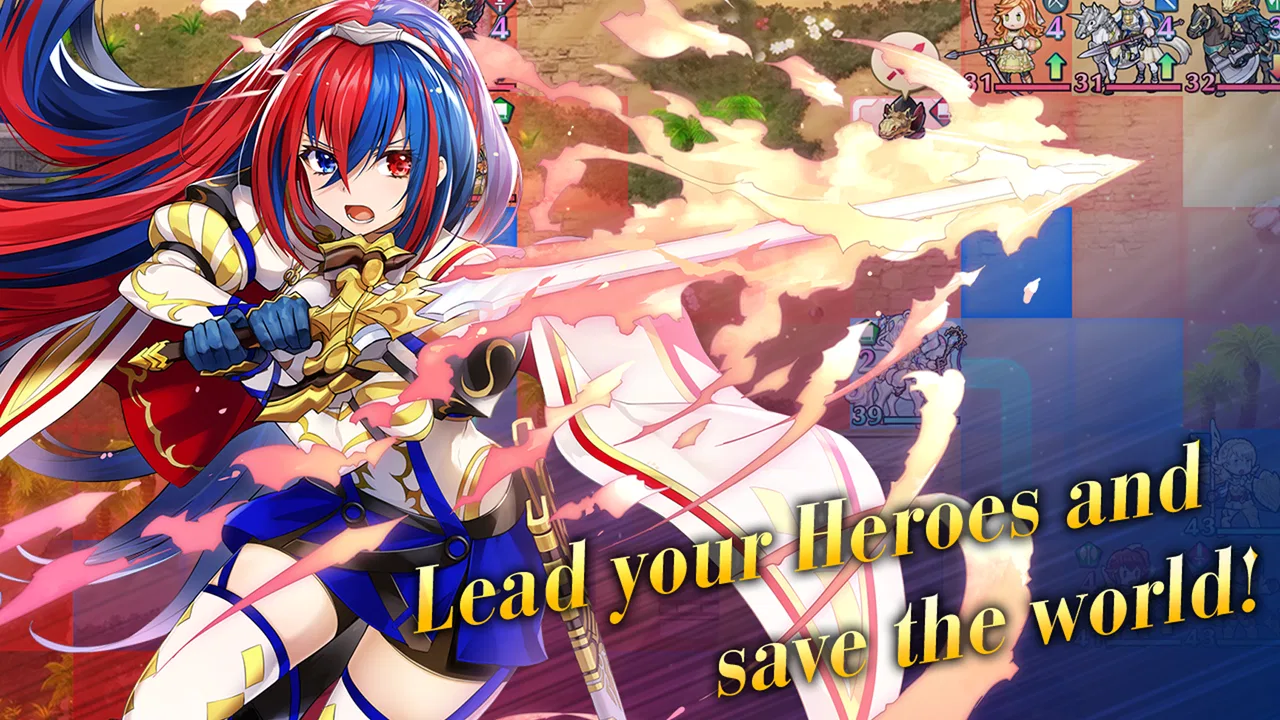
Fire Emblem Heroes is a strategy RPG developed by Nintendo for iOS and Android. It brings characters from the popular Fire Emblem series into a new adventure, allowing players to summon heroes from different Fire Emblem worlds, engage in tactical battles, and explore a rich storyline. The game combines elements of turn-based strategy with character collection.
02Is Fire Emblem Heroes free to play?
Yes, Fire Emblem Heroes is free to download and play. However, it offers in-app purchases that allow players to buy orbs, which can be used to summon heroes and acquire various in-game items. While it's possible to enjoy the game without spending money, some players choose to make purchases to enhance their experience.
03What are orbs and how do I use them?
Orbs are the primary currency in Fire Emblem Heroes. They are used to summon new heroes, expand your barracks, and restore stamina. Players can earn orbs through in-game events, quests, and login bonuses. Additionally, orbs can be purchased with real money, giving players more opportunities to summon and strengthen their team of heroes.
04How does the summoning system work?
The summoning system in Fire Emblem Heroes allows players to call forth heroes from various Fire Emblem worlds. Players use orbs to summon heroes, with each session offering a selection of characters with different star ratings. Higher star ratings indicate stronger and rarer heroes. The game frequently updates with new summoning events that feature different heroes.
05What are some tips for new players?
New players should focus on completing story missions to earn orbs and gain experience. It's beneficial to participate in special events for additional rewards. Managing stamina efficiently and leveling up heroes strategically will enhance your gameplay. Joining online communities can also provide valuable insights and strategies to improve your experience.
Pros
- Engaging tactical gameplay.
- Wide variety of characters.
- Frequent updates and events.
- Rich
- detailed graphics.
- Free-to-play with optional purchases.
Cons
- Requires constant internet connection.
- Can be repetitive over time.
- Limited stamina restricts playtime.
- Some characters hard to obtain.
- Can be overwhelming for new players.

Fire Emblem Heroes
Gallery